

WHAT WE DO
Cardiac Electrophysiology
Electrophysiology is a discipline of cardiology that focuses on the diagnosis and treatment of cardiac arrhythmias.
In a normal heart, the sinus node generates an electrical impulse that spreads across the two upper chambers (atria). This causes the atria to contract, pushing blood through the heart’s valves into the two lower chambers, known as ventricles.
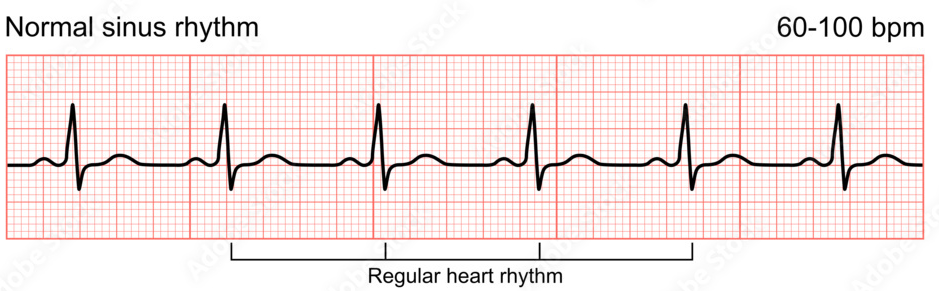
At the same time, the electrical signal reaches a specialized area of electrical tissue called the AV node. From there, the impulse travels rapidly down specialized pathways known as the bundle branches, leading to the contraction of the ventricles and the ejection of blood into the large blood vessels that exit the heart.
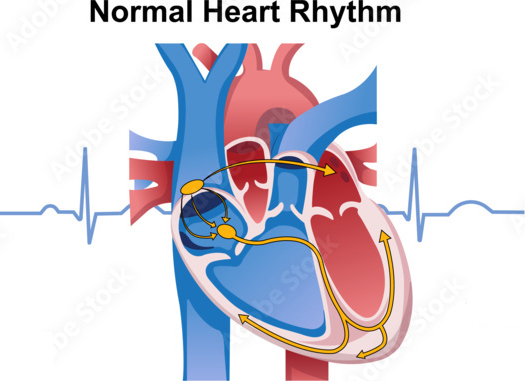
This cycle repeats continuously, a process known as Sinus Rhythm. It begins with an impulse from the SA node and follows the same pathway with each heartbeat. In this rhythm, the atria and ventricles contract in a coordinated, one-to-one sequence—first the atria, followed by the ventricles.
Cardiac arrhythmia, or heart rhythm abnormality, is a term that refers to an irregular, too fast (tachycardia) or too slow (bradycardia) heartbeat.
A fast or slow heartbeat can be normal. For example, a person’s heart rate typically slows down during sleep and increases during exercise.
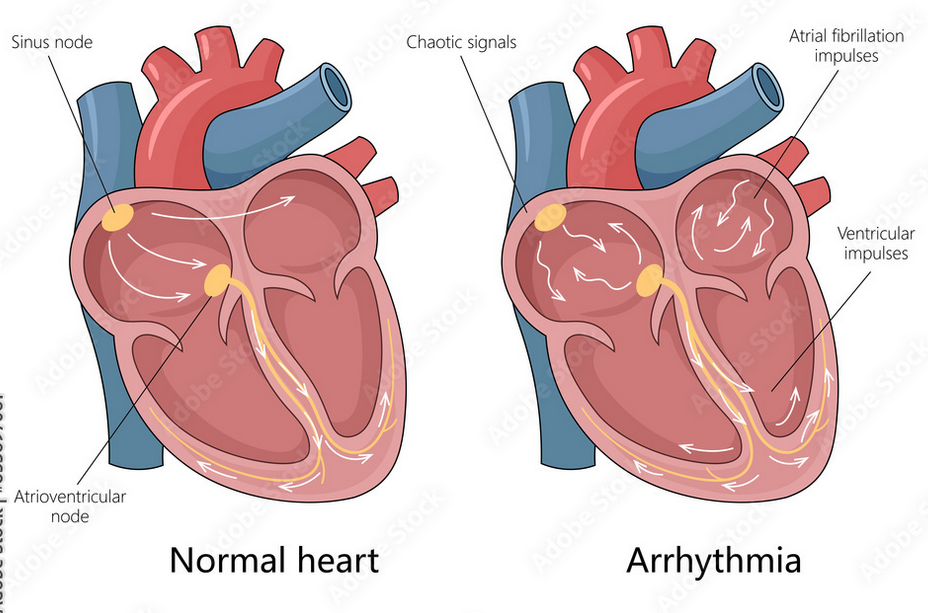
Patients experiencing arrhythmia often describe it as a fluttering sensation in the chest, while others may feel a pounding or racing heartbeat. Some may also notice occasional skipped beats. While certain arrhythmias are harmless, others can lead to serious or even life-threatening complications.
Accurately diagnosing and identifying abnormal heart rhythms is crucial for effective treatment. Treatment includes, but is not limited to, medication, EP-study, ablation, and implantable devices like pacemakers and implantable cardiac defibrillators.
 ECG
ECG