

WHAT WE DO
Atrial Fibrillation (AF) Care
Atrial fibrillation (AF) is the most commonly found and sustained cardiac arrhythmia. It is characterised by a quivering of the upper chambers of the heart, called the atria.
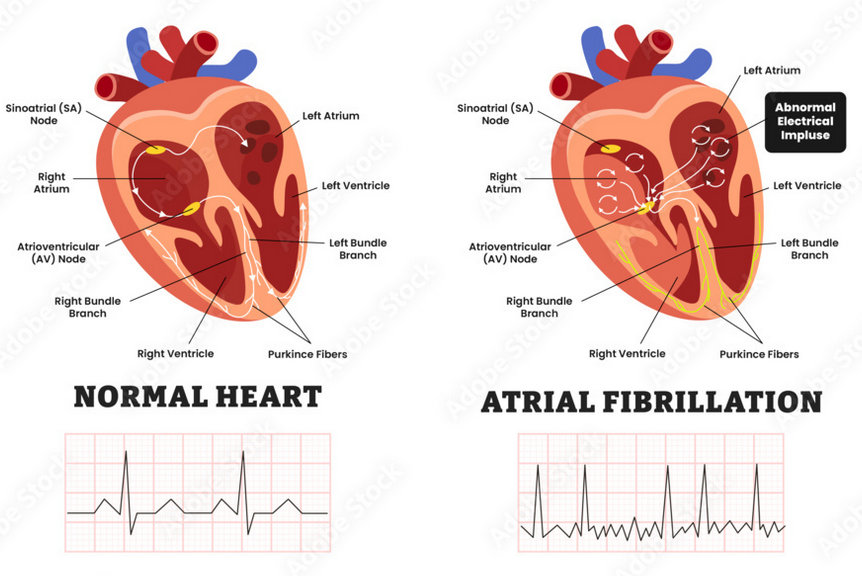
During episodes of AF, the upper chambers (atria) beat fast, chaotically, and irregularly at a rate of more than 600 bpm. The atria are out of sync with the ventricles, resulting in an irregularly irregular pulse.
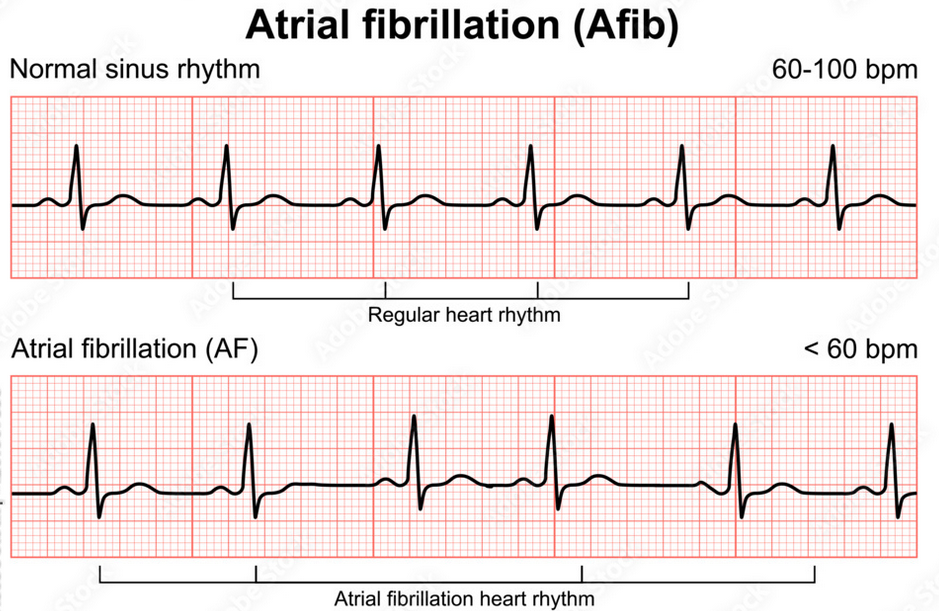
The prevalence increases as patients age, and it is estimated that 25% of all middle-aged adults may develop AF.
Episodes of atrial fibrillation may come and go—we refer to this as paroxysmal AF—or they may be persistent. AF itself usually isn’t life-threatening, but it is a serious medical condition associated with debilitating symptoms and impaired quality of life.
Atrial fibrillation increases morbidity risk, including heart failure and stroke, and is associated with a 1.5-fold to two-fold increased risk of all-cause mortality in both men and women.
The worldwide prevalence of AF was estimated at 33.5 million people, and by 2016, this had increased to 59 million people living with AF globally. Men accounted for 62% of this figure. There are higher incidence and prevalence rates of AF in developed countries.
AF is associated with underlying cardiac disease, most commonly:
- Coronary artery disease
- Valvular heart disease
- Cardiomyopathy
Other frequent co-morbidities include:
- Hypertension
- Diabetes
- Heart failure
- Chronic obstructive pulmonary disease (COPD)
- Renal failure
- Stroke
Because of the irregular nature of the heart rhythm and the fact that the atria do not contract properly, there is a risk of blood clots forming inside the heart, particularly in an area called the atrial appendage. These clots may travel to the brain and cause a stroke. As many as 15–20% of people who have strokes are found to have atrial fibrillation.
Untreated AF:
- Doubles the risk of heart-related death.
- Is associated with a fivefold increased risk of stroke.
Symptoms of Atrial Fibrillation include:
- Feelings of a fast, fluttering, or pounding heartbeat (palpitations)
- Chest pain
- Dizziness
- Fatigue
- Light-headedness
- Reduced ability to exercise
- Shortness of breath
- Weakness
Some people with atrial fibrillation do not notice any symptoms.
For more information visit:
 ECG
ECG